






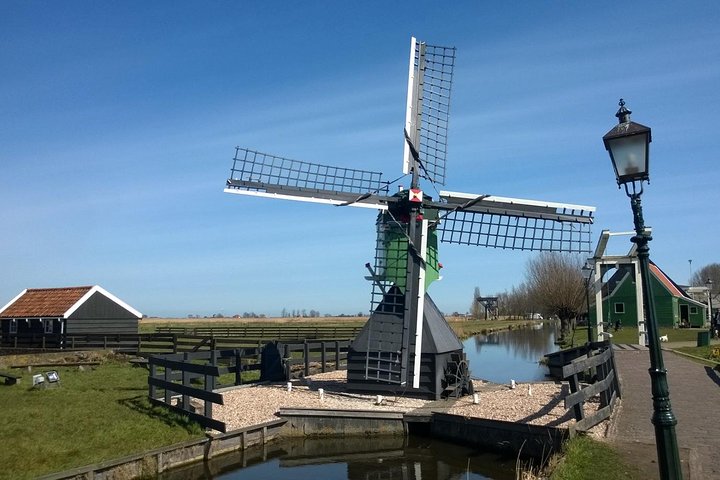
Icons of the Dutch Landscape
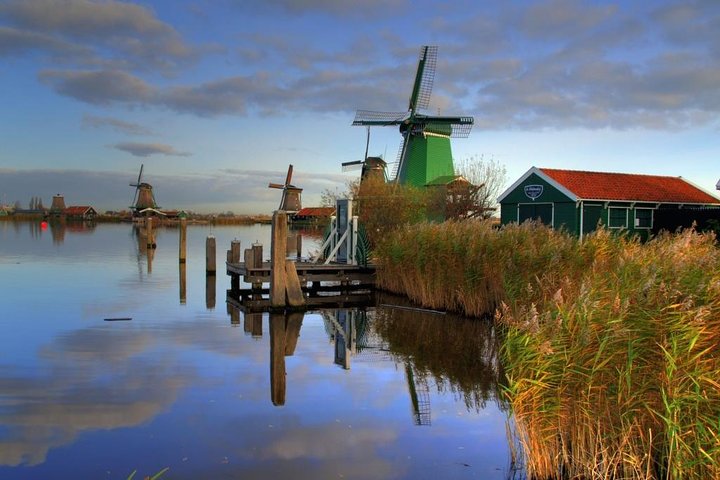
Windmills are the defining image of the Netherlands — the technology that made the country possible by pumping water from below sea level, draining the polders, milling grain, and sawing timber. Amsterdam and the surrounding countryside contain several accessible windmill experiences, from the concentrated heritage village of Zaanse Schans (covered in its own section) to individual windmills within Amsterdam itself.
De Gooyer is Amsterdam’s most prominent city windmill — a tall, octagonal smock mill (the body rotates on a fixed base) on the eastern waterfront, adjacent to the Brouwerij ‘t IJ craft brewery. The combination of windmill and brewery is one of Amsterdam’s most distinctive scenes — drinking a craft beer on the brewery terrace beneath the windmill sails.
Zaanse Schans (covered separately) is the primary windmill destination — 8 working windmills on the Zaan River, 30 minutes from Amsterdam.
Kinderdijk (approximately 90 kilometres south of Amsterdam, about 1.5 hours by road) — a UNESCO World Heritage Site with 19 windmills in a row along a polder drainage canal. The most dramatic windmill landscape in the Netherlands, but a full-day excursion from Amsterdam.
Frequently Asked Questions
Where can I see windmills near Amsterdam?
Zaanse Schans (30 minutes north — the most accessible and comprehensive), Kinderdijk (1.5 hours south — UNESCO, the most dramatic), and De Gooyer (within Amsterdam — a single windmill with an adjacent brewery).
Can I go inside a windmill?
Yes, at Zaanse Schans (multiple windmills open to visitors), De Gooyer (limited access), and Kinderdijk (selected windmills open). Inside, you see the milling mechanisms — gears, shafts, and millstones — and can often climb to the cap where the sails are attached.