




The Living Windmill Village
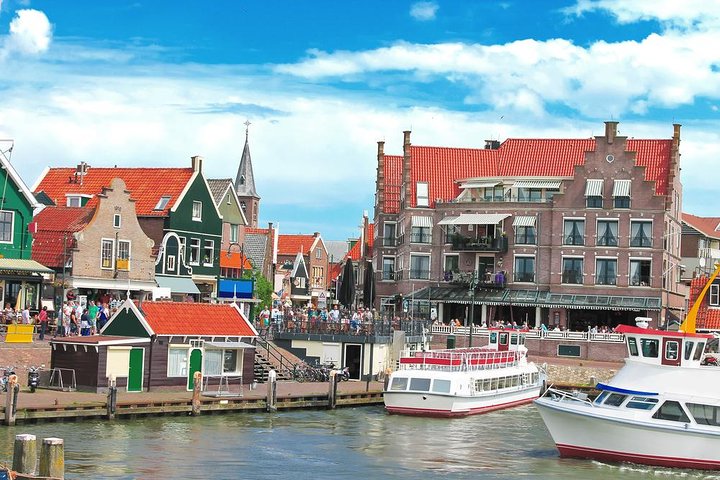
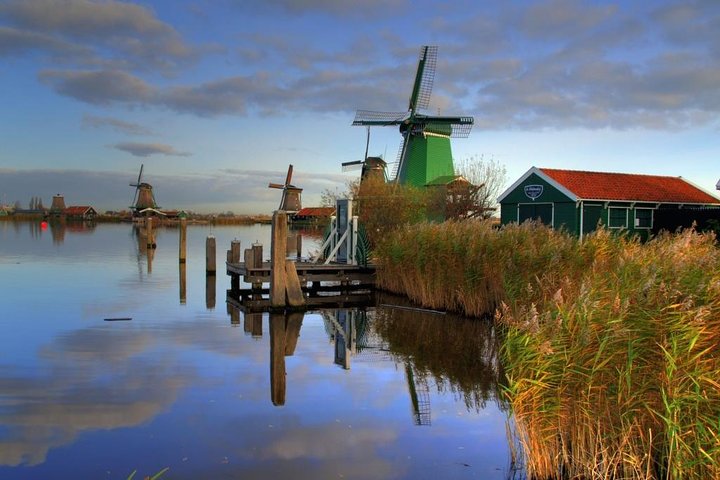
Zaanse Schans is an open-air heritage village on the Zaan River approximately 20 kilometres north of Amsterdam (30 minutes by train, 40 minutes by road). The village preserves and reconstructs the industrial windmill landscape of the Zaan district — a region that was one of the world’s first industrial zones, where wind-powered mills processed timber, paint, oil, mustard, and cocoa for export during the Golden Age. Today, the village contains working windmills (you can enter them and see the machinery in operation), a clog-making workshop, a cheese farm, a pewter workshop, historic houses, and the Zaans Museum documenting the region’s industrial heritage.
Zaanse Schans is the most accessible windmill experience from Amsterdam and the most popular day trip from the city after Keukenhof (seasonal). The village is free to enter (individual attractions — the windmills, the workshops, the museum — have admission fees), and the combination of windmills against the Dutch waterway landscape, the traditional craft demonstrations, and the easy half-day format makes it one of the most satisfying short excursions from Amsterdam.
What You Will See
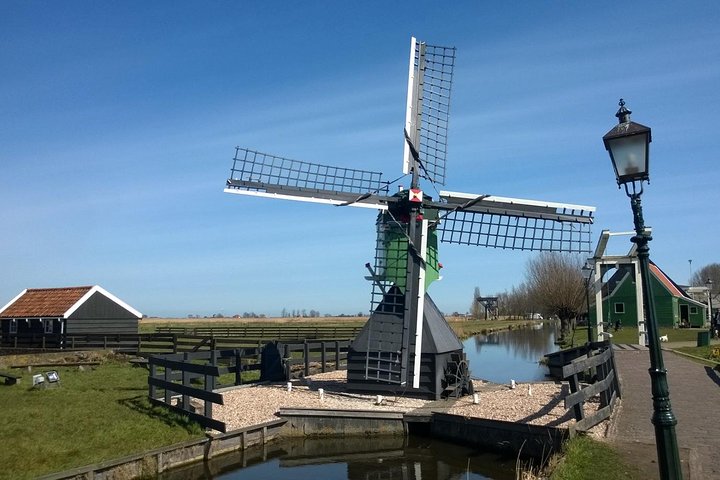
The windmills — approximately 8 working windmills on the Zaan riverbank, each performing a different function (sawmill, oil press, paint mill, mustard mill). You can enter several windmills, climb to the cap (the rotating top that turns the sails into the wind), and watch the milling mechanisms operate — gears, shafts, and millstones driven by the sails.
The clog workshop (klompenmakerij) demonstrates traditional Dutch clog-making — a craftsman carves a wooden shoe from a block of willow or poplar in minutes using a combination of hand tools and mechanised carving equipment. The demonstration is brief, entertaining, and produces the iconic Dutch souvenir.
The cheese farm offers tastings and a demonstration of Gouda-style cheese making — the curding, pressing, and ageing process explained in 15 minutes, followed by free tastings of the farm’s cheeses (young, mature, aged, flavoured).
Practical Tips
Visit in the morning for fewer crowds. Tour buses arrive from 10:00 AM onward. Arriving by train at 9:00–9:30 AM gives you the windmills and the river view with space to breathe.
The Zaans Museum is worth the admission. It provides the industrial and historical context that makes the windmills meaningful — not just picturesque wooden structures but the machines that powered an economic revolution.
The village is free; the attractions are not. Entry to individual windmills, the museum, and the workshops costs €3–15 each. A Zaanse Schans Card bundles most attractions at a discount.
Frequently Asked Questions
How do I get to Zaanse Schans from Amsterdam?
Train from Amsterdam Centraal to Zaandijk Zaanse Schans — approximately 17 minutes, trains run every 15 minutes. The walk from the station to the village is 15 minutes. Alternatively, guided bus tours from Amsterdam run 4–6 hours.
How long should I spend at Zaanse Schans?
Two to three hours covers the main windmills, the clog workshop, the cheese farm, and the museum. A half-day (4 hours including transit) is the comfortable minimum.
Is Zaanse Schans a real village or a theme park?
It is a heritage village — real historic buildings (some relocated from their original sites to preserve them), working windmills, and functioning craft workshops. People live in some of the houses. It is more authentic than a theme park but more curated than a natural village.
Is Zaanse Schans suitable for children?
Excellent for children. The windmill machinery, the clog-making demonstration, the cheese tasting, and the outdoor waterside setting engage children actively. One of the most family-friendly excursions from Amsterdam.